

How Wind Developers Evaluate Tower Fabricators for Utility-Scale Projects
Wind developers evaluate tower fabricators by testing whether each supplier can build the specified tower repeatedly, document its quality, deliver sections through a feasible transport route, and support the project if something goes wrong. The lowest fabrication quote is not necessarily the lowest project cost. Welding defects, flange misalignment, incomplete records, or late shipments can disrupt turbine erection and create expensive field work.
A sound selection process starts with the turbine OEM’s approved design and interfaces. It then compares fabricators on relevant experience, manufacturing capacity, welding and inspection controls, material traceability, coating, logistics, commercial terms, and financial resilience. Developers should make award decisions only after checking the evidence behind each claim, including factory records and an achievable production schedule.
At Hubexo, we find it useful to separate two jobs that are often conflated: market discovery, identifying projects, stakeholders, and potential participants, and technical qualification, proving that a particular factory can make the required tower. Construction intelligence helps with the first. Engineering review, supplier audits, and contract controls decide the second.
What a tower fabricator is responsible for
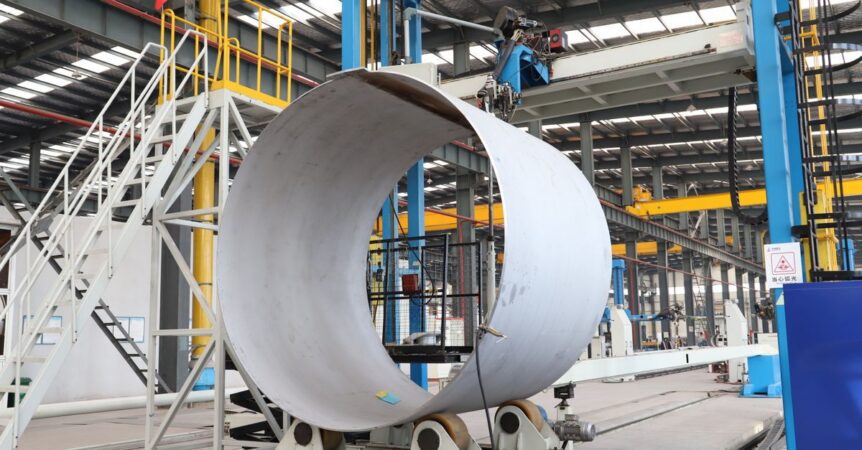
A wind tower fabricator turns approved tower requirements into manufacturable, transportable sections. On a typical steel tower program, this can involve plate cutting and rolling, shell and flange welding, dimensional control, surface preparation, coating, internal components, inspection, and shipment. The exact scope depends on the contract. Engineering, flanges, internal electrical supports, transport, and installation support may be divided among the OEM, fabricator, developer, and EPC contractor.
That division matters. A fabricator cannot be judged fairly against requirements it does not control, yet a gap between scopes can leave nobody responsible for a critical interface. Before soliciting bids, identify who approves tower drawings, owns design changes, specifies the welding and inspection regime, accepts each tower section, and resolves questions at the site. Confirm that the base flange fits the foundation interface and that the upper section meets the turbine OEM’s connection requirements.
The tower is also a fatigue-sensitive structure. Weld quality, geometry, and material properties affect performance under repeated loads. A procurement team therefore needs more than a corporate capability statement. It needs a way to connect individual plates, welds, inspections, and completed sections to the approved design.
Evaluate the supplier against the project, not a generic factory profile
Our preferred framework has four connected questions: Can they build it? Can they prove it? Can they deliver it? Can they stand behind it? A strong answer in one category does not compensate for a failure in another. A plant may have excellent welding equipment but no credible route for its largest finished section. Another may have attractive delivery dates but no clear method for preserving material traceability after cutting.
Can they build it?
Check comparable tower work, equipment limits, engineering interfaces, qualified people, and available production capacity. The relevant unit is the proposed tower section, not an abstract annual capacity figure.
Can they prove it?
Look for approved procedures, inspection and test plans, material certificates, weld records, dimensional reports, coating records, and closed nonconformances tied to each section.
Can they deliver it?
Validate the factory-to-site route, transport responsibilities, delivery sequencing, temporary storage, and contingency for damage or missed shipment windows.
Can they stand behind it?
Review financial capacity, insurance, warranty obligations, field-response responsibilities, and how the supplier manages its own critical subcontractors.
Technical qualification: design, materials, welding, and fit
Start with comparable experience and an explicit design boundary
Ask for examples of tower sections similar in diameter, length, weight, material, coating, and interface complexity. General heavy-steel experience is useful, but it does not by itself demonstrate control of a serial wind-tower production line. Speak with previous customers about drawing changes, factory acceptance, documentation delivery, transport damage, and field fit. The point is to understand how the factory behaved when the work departed from its original plan.
Review the fabricator’s proposed drawings and submittal flow with the OEM and project engineer. Clarify who checks shell geometry, flange details, door openings, internal platforms, lifting features, and the foundation and nacelle interfaces. Set a formal revision process so that a late design change cannot reach one shift while another continues building to an obsolete drawing.
Follow the material through the factory
Material traceability is a physical and administrative control. Request the specified steel grades, applicable material certificates, heat identification practices, receiving records, and substitution procedure. During a factory visit, choose a component on the shop floor and ask the team to trace it back to its original material record. Then follow a certificate forward to the parts made from that material. Both directions matter.
Pay particular attention to what happens after plate cutting, when a large marked plate becomes several smaller pieces. The supplier should be able to explain how identification survives cutting, forming, rework, coating, and final assembly. Any proposed material substitution needs a documented technical review and approval by the party authorized under the project contract.
Inspect the welding system, not just the certificate
Ask for the welding procedure specifications, supporting qualifications, welder or operator qualifications, weld maps, non-destructive examination plan, and repair process required by the project specification. A certificate can indicate that a management system exists. Actual weld records and completed corrective actions show how the system works in production.
Check how the factory controls joint preparation, fit-up, preheat where required, welding sequence, and inspection. Ask who can stop production when a weld fails acceptance criteria, who approves a repair, and whether a repaired location can be identified later in the completed tower record. Acceptance criteria and examination methods should be set by the governing design, contract, and applicable standards, not chosen casually after a defect appears.
Make dimensional control an interface issue
Shell roundness, section straightness, flange condition, bolt-hole fit, and internal component locations affect assembly at the wind farm. Request the actual dimensional inspection plan, calibrated measurement methods, and acceptance records. A finished section that looks sound in the factory can still create problems when stacked with adjacent sections or connected to the foundation.
The first completed section or assembly is a valuable decision point. Have the relevant engineering, quality, and installation representatives review it against the released drawings before the same tooling and methods are repeated across the project. Agree in advance which checks are witnessed, what constitutes acceptance, and how any required correction affects subsequent production.
Factory capacity is a schedule calculation
Annual production claims can obscure the constraints of a particular order. Build the schedule backward from the installation sequence. For each tower lot, ask when approved drawings, plate, flanges, labor, welding stations, coating space, inspection resources, and transport equipment must be available. Then compare that demand with other orders occupying the same people and machines.
A useful capacity review includes the bottleneck operation, not only total factory floor area. If the largest plate roller, a specific weld station, or the coating area controls throughput, ask what happens when that resource is down or rework consumes its available time. Confirm which activities are subcontracted and whether those subcontractors have reserved capacity. A plausible recovery plan is more persuasive than a schedule with no room for interruption.
Separate manufacturing complete, quality released, ready to ship, and delivered to site in progress reports. These are different milestones. A painted section awaiting an unresolved inspection record or a transport permit is not yet available to the erection contractor.

Assess logistics before comparing quoted prices
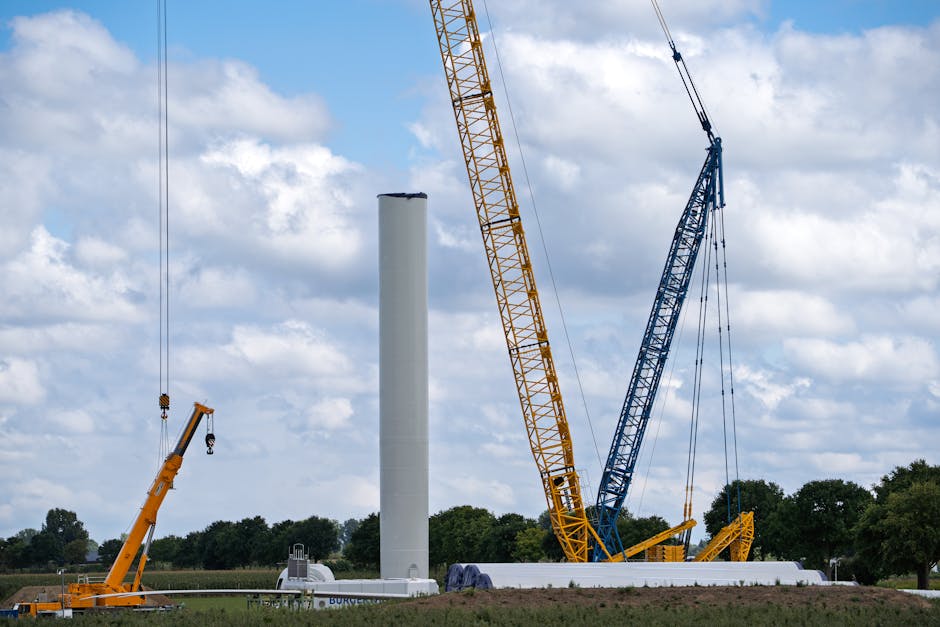
Finished tower sections are large loads. A bid comparison should account for section dimensions and weight, loading method, route restrictions, applicable permits, carrier availability, laydown space, unloading equipment, and the site’s installation sequence. The supplier, carrier, EPC contractor, and erection team should agree on handoff points and the condition in which a section must arrive.
Ask for a route and delivery concept early enough to influence supplier selection. Which roads and crossings can accommodate the proposed sections? Who arranges permits and escorts where required? Where can loads wait if the site cannot receive them? How are coatings, flange faces, and internal components protected in transit? What is the procedure for inspecting and recording damage at delivery?
Compare landed, usable cost, not just the factory gate price. Include responsibilities for transport, handling, storage, repair, rejected sections, documentation, and field response. If two bids exclude different work, normalize their scopes before ranking them. Otherwise the apparent price difference may be a transfer of risk to the developer rather than a saving.
A step-by-step tower fabricator qualification process
The strongest procurement sequence makes technical eligibility clear before price becomes decisive. Each step should produce an artifact the next team can use, rather than another unstructured meeting.
-
Define the purchase scope and interfaces
Bring together the OEM requirements, approved tower design, coating requirements, inspection obligations, delivery points, documentation package, and responsibilities for engineering changes. State which party has authority to accept deviations.
-
Build a supplier longlist and screen for fit
Identify candidate factories through project relationships, industry contacts, and relevant construction and energy project intelligence. Screen for the physical capability to make and ship the specific sections before inviting extensive proposals. For context on the wider component ecosystem, see our guide to the suppliers behind utility-scale wind projects.
-
Issue the same evidence request to each candidate
Request comparable project references, equipment capabilities, current commitments, sample quality records, inspection plans, material traceability procedures, logistics assumptions, and commercial exclusions. Consistent questions make gaps visible.
-
Audit the factory and its critical subcontractors
Walk the actual material flow, meet the people responsible for production and quality, and test record retrieval using a real part or completed section. Check equipment ratings and maintenance practices against the proposed tower geometry.
-
Resolve risks before commercial ranking
Record each open issue, its consequence, its owner, and the evidence needed for closure. Disqualify unresolved fundamental gaps, such as an impossible transport route or an inability to meet a required inspection regime.
-
Compare normalized bids
Use the same delivery point, scope, schedule, inspection obligations, warranty assumptions, and change rules for each bidder. Present the remaining technical risks alongside landed cost rather than hiding them in a single price column.
-
Control first production and follow through to delivery
Set drawing release, first-section review, inspection hold points, quality-record submission, shipment release, and site acceptance in the contract. Monitor progress by section throughout the production run.
Use a scorecard without letting averages hide failures
A scorecard is helpful when several teams must compare suppliers, but it should not turn a critical deficiency into a harmless average. Set non-negotiable entry requirements first. Then score the eligible bidders against the same evidence and explain material differences in writing.
| Evaluation area | Evidence to request | Risk the evidence tests |
|---|---|---|
| Technical fit | Comparable towers, equipment limits, released design workflow | Inability to manufacture the specified sections |
| Quality control | Welding procedures, inspection plans, traceable records, corrective actions | Nonconforming work or incomplete acceptance evidence |
| Schedule capacity | Load plan, existing commitments, bottleneck review, recovery approach | Late production or quality release |
| Delivery | Transport assumptions, route review, carrier roles, site handoff plan | Sections arriving late, damaged, or out of sequence |
| Commercial resilience | Scope exclusions, financial review, insurance, warranty and remedy terms | Unpriced obligations or weak post-delivery support |
Weighting should reflect the project’s actual exposure. A remote site with difficult road access may place more emphasis on logistics than a project near established heavy-haul routes. A novel tower geometry may require more scrutiny of equipment limits and first-section dimensional inspection. Whatever the weights, a bidder should not advance if it cannot meet a mandatory design, safety, or quality requirement.
Factory audit questions that expose real constraints
The best audit questions ask a team to demonstrate a process, not simply confirm that a policy exists. Consider these prompts while walking the shop and reviewing the proposed order:
- Show us how a plate heat identifier is carried through cutting, welding, coating, and final records.
- Which operation sets the production rate for our largest tower section, and what other work is scheduled there?
- Show a recent nonconformance, its approved disposition, reinspection, and final closure.
- Who has authority to pause fabrication when drawings or inspection criteria change?
- How are flange geometry and completed-section dimensions measured and recorded?
- Which welding, machining, coating, or transport activities will another company perform?
- What is the plan if a critical machine becomes unavailable while our order is in production?
- Who responds when an erection crew identifies a possible fit or coating issue at the site?
Listen for answers that reference specific people, records, and decision rights. A vague assurance that the factory has never had a problem tells a developer less than a well-documented example of how a problem was contained and corrected.
Best practices for keeping procurement and construction aligned
Bring installation and logistics into supplier selection. A tower is not a successful purchase until it can be erected. Have the field team review section geometry, arrival sequence, unloading assumptions, and access constraints before award.
Make quality records a deliverable, not an afterthought. Define the required document index, identification scheme, review responsibilities, and release points in the purchase order. The document package should let a reviewer follow a particular section back through its material and fabrication history.
Set change authority early. Distinguish a shop clarification from a design change or a deviation that requires OEM or engineer approval. Record decisions against drawing revisions and affected serial numbers or sections.
Review exceptions in context. A small repair performed under an approved process is different from recurring defects that indicate a production-control problem. Look for patterns by weld type, shift, machine, and production stage rather than treating every exception as an isolated event.
Track risk across the full supplier chain. The tower factory may depend on steel mills, flange providers, coating specialists, and heavy-haul carriers. Ask which parties are critical to schedule and what commitments are in place. Developers evaluating the turbine package as a whole can pair this work with a broader review of turbine OEM and supply chain risk.
Where project intelligence supports supplier sourcing
Market visibility helps teams begin earlier. Hubexo’s Geospatial Energy and Mining (GEM) covers renewable energy project data in the United States and Canada across project lifecycles, with geospatial analysis through Geospex. That context can help procurement and business development teams understand where wind activity is developing and which organizations are involved. ConstructionWire provides project leads, market analysis, and decision-maker contacts across construction sectors, with project tracking from proposal through completion.
These tools serve discovery and relationship mapping. They do not replace the factory audit, design review, or acceptance testing that determines whether a tower fabricator is qualified. For teams approaching a new market, the useful sequence is to identify relevant activity and stakeholders, build a focused supplier longlist, then apply the same technical and commercial checks to every serious candidate. Our guide to researching renewable energy companies before construction covers that earlier research stage.
Frequently asked questions
What is the most important criterion when choosing a wind tower fabricator?
There is no single substitute for project-specific technical qualification. Start with the ability to meet the approved design and quality requirements, then confirm production capacity and delivery feasibility. Price matters after those threshold issues are resolved.
Should developers choose the tower fabricator or leave it to the turbine OEM?
That depends on the turbine supply and project contracts. Even when the OEM selects or manages the fabricator, the developer should understand who owns quality acceptance, delivery risk, design changes, warranty remedies, and access to fabrication records.
What records should be available for each tower section?
Expect a section-specific package reflecting the contract: material identification and certificates, applicable welding and inspection records, dimensional reports, coating records, nonconformance dispositions, and release documentation. The key is traceability between the records and the physical section.
How can a developer test whether a production schedule is credible?
Compare the required shipment sequence with approved drawing dates, material arrivals, occupied equipment, labor, inspection resources, coating throughput, and transport availability. Ask the supplier to identify its bottleneck and demonstrate a recovery approach if rework or downtime occurs.
Why is a factory audit necessary if the supplier has certifications?
Certifications can support initial screening, but an audit checks how the factory applies its controls to real parts, records, equipment, and people. Trace a component through the system and review how the team handled an actual nonconformance.
How should tower bids be compared?
Normalize the bids to the same scope and delivery point. Compare technical compliance, documented quality controls, achievable delivery, warranty support, exclusions, and landed usable cost. Do not allow a low factory price to conceal transport or field-repair obligations.
Choose the supplier whose evidence matches the obligation
The strongest tower fabricator is the one that can turn approved requirements into conforming sections at the required pace, prove what was built, deliver it in erection order, and respond when a problem emerges. Developers make better decisions when they test those claims before award and carry the same controls through first production, shipment, and site acceptance.
For teams building a clearer view of wind projects and the organizations around them, Hubexo connects project information and market intelligence with the early research that makes disciplined procurement possible.